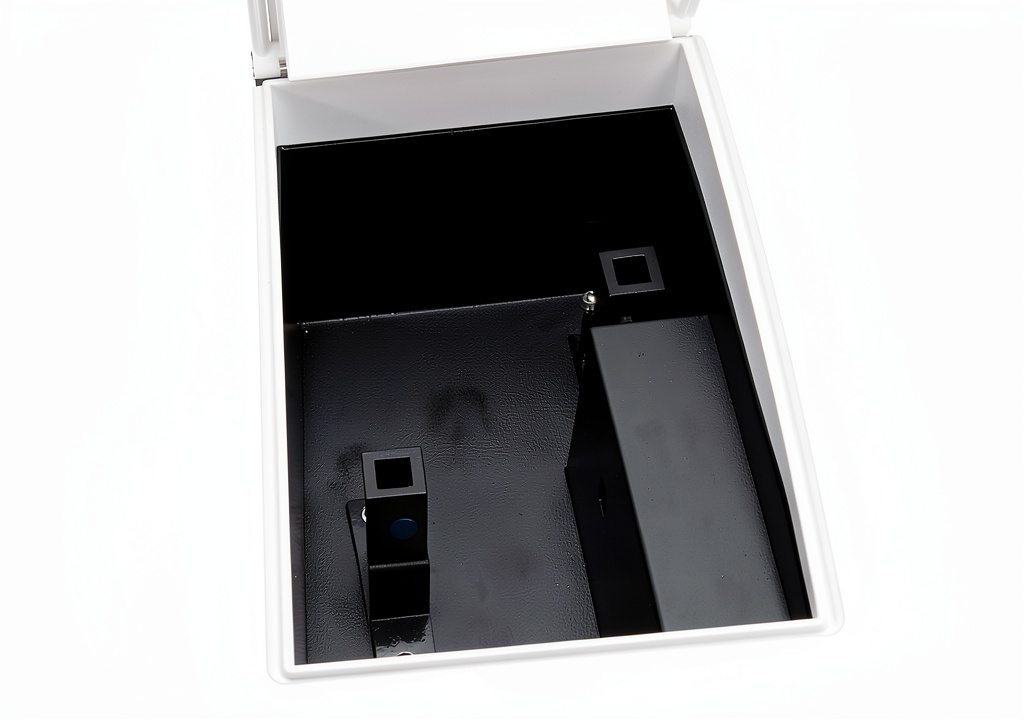

Description
Product Overview
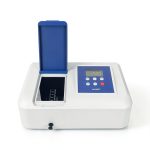
The UV‑9000S spectrophotometer, engineered by M&A Instruments, is a high‑performance laboratory instrument designed for precise absorbance and transmittance measurements across a broad wavelength range. Its dual‑beam optical configuration separates the sample and reference light paths, minimizing circuit fluctuations and stray light, which translates into superior stability and repeatable results for demanding analytical applications.
A standout feature of the UV‑9000S is its 520 mm long light path, achieved through a unique optical layout that extends the distance between the entrance and exit slits. This extended path length dramatically improves wavelength resolution, allowing the instrument to resolve closely spaced spectral peaks that are often indistinguishable on shorter‑path devices. The result is clearer, more detailed spectra that support advanced method development and validation.
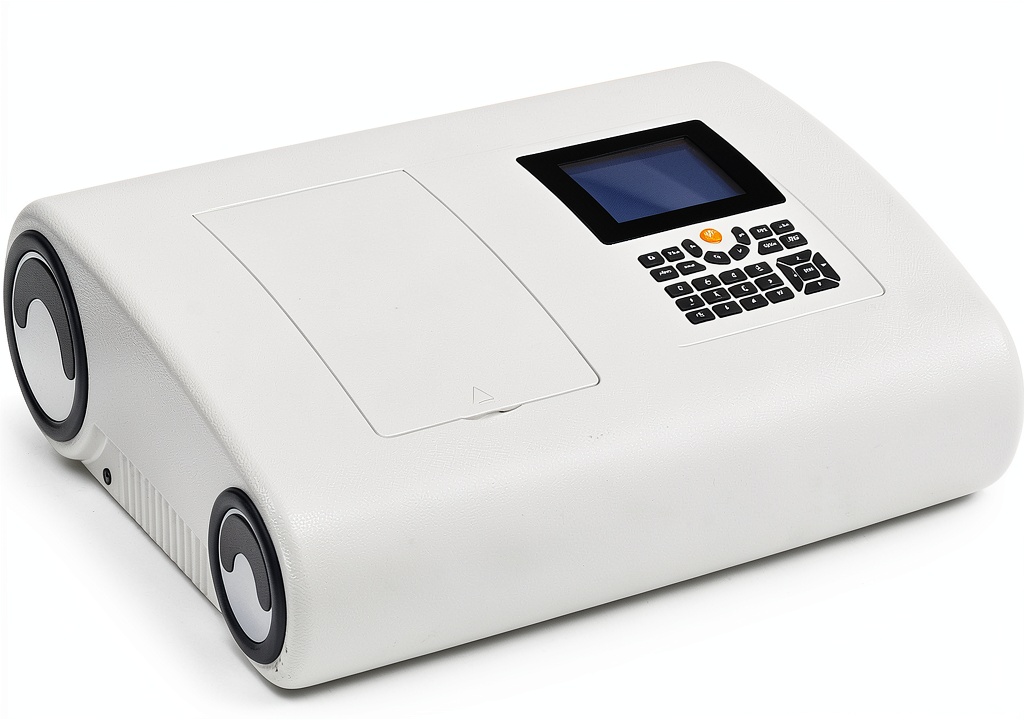
The mechanical design reinforces reliability. All optical components are mounted on a 16 mm thick die‑cast aluminum base, creating a rigid structure that resists vibration and thermal drift. The robust ABS housing protects internal optics while keeping the overall weight manageable at 77 pounds, making the spectrophotometer suitable for both bench‑top installations and mobile laboratory carts.
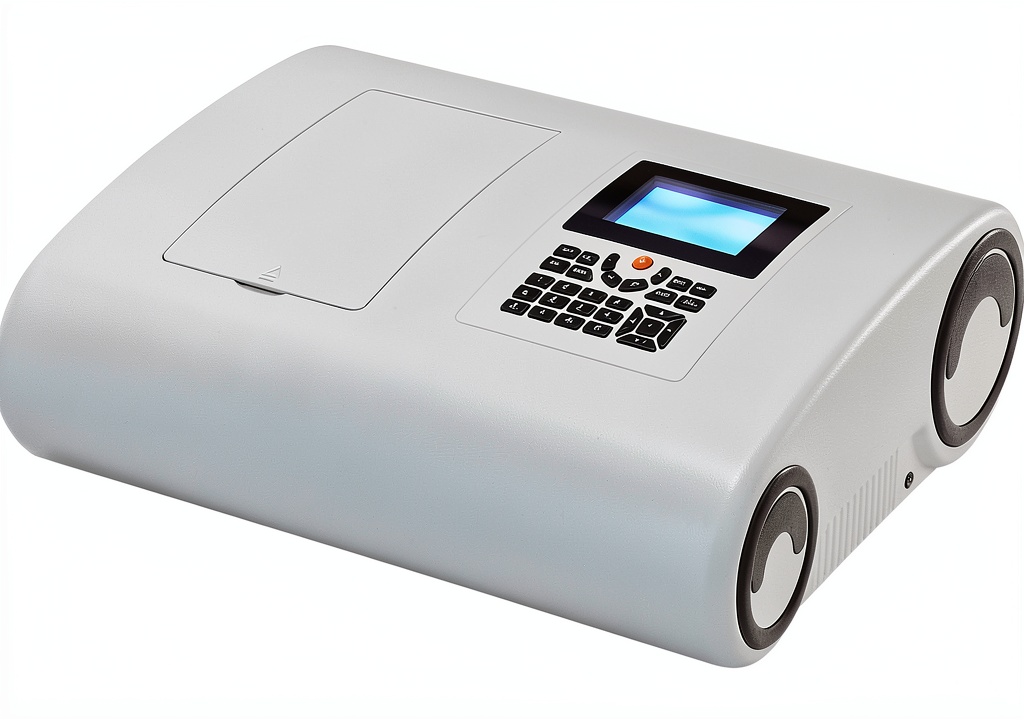
User interaction is streamlined through a 6‑inch high‑definition LCD display that presents data, graphs, and status messages with crisp clarity. The interface includes intuitive menus for spectrum scanning, standard curve generation, kinetic studies, multi‑wavelength analysis, and even DNA or protein quantification, all of which can be executed directly on the device without requiring external computer software. One‑button automatic calibration simplifies baseline, wavelength, and dark current adjustments, ensuring the instrument remains in optimal condition with minimal user effort.
Data export options further enhance workflow flexibility. A built‑in USB port enables fast transfer of spectra and analytical results to a PC for archival or advanced processing, while a parallel port provides direct printing capability to compatible micro‑thermal printers for on‑site record keeping. The combination of robust hardware, comprehensive software functions, and straightforward connectivity makes the UV‑9000S a versatile solution for quality control labs, research facilities, and educational institutions.
Powered by a reliable AC source, the UV‑9000S eliminates the need for batteries, ensuring uninterrupted operation during long analytical runs. Its compact footprint—measuring 24.6 × 1.7 × 8.3 inches—fits comfortably on standard laboratory benches without sacrificing internal component space. The instrument’s single‑unit packaging includes all necessary accessories, and the optional accessories such as a thermostated cuvette holder and fiber‑optic probe expand its capability for temperature‑controlled measurements and remote sampling. With a proven track record since its introduction in 2014 and a best‑seller rank among lab spectrophotometers, the UV‑9000S continues to be a trusted choice for scientists seeking accuracy, durability, and ease of use.
The instrument’s software suite is pre‑installed and ready to run, offering intuitive graphical interfaces for data acquisition, analysis, and reporting. Users can generate calibration curves, perform kinetic assays, and compare multi‑wavelength scans with a few clicks, while the software automatically logs instrument status and environmental parameters for compliance documentation. Exported files are compatible with common formats such as CSV and PDF, facilitating seamless integration into laboratory information management systems (LIMS) and ensuring traceability of results.
![[Product front view showing all components]](https://www.clicknex.store/wp-content/uploads/2026/06/d77a7dd9b47c48cfbc6a830b4d94839f.jpg)
Usage
The UV‑9000S is ideally suited for quality‑control laboratories in pharmaceutical, food, and cosmetics industries where precise absorbance measurements are critical for compliance with regulatory standards. Its dual‑beam design eliminates baseline drift, allowing technicians to quickly verify raw material purity, monitor batch consistency, and detect contaminants without extensive sample preparation.
In research environments, the extended 520 mm light path provides the resolution needed for spectroscopic studies of complex mixtures, enabling scientists to distinguish overlapping peaks in nucleic acid quantification, protein assays, and kinetic enzyme reactions. The built‑in kinetic mode records absorbance changes over time, supporting real‑time monitoring of reaction rates and facilitating rapid method development.
Field technicians benefit from the rugged construction and portable dimensions, allowing the UV‑9000S to be mounted on mobile carts for on‑site testing of water quality, environmental samples, and industrial process streams. The USB and parallel port interfaces enable immediate data capture and printing, which is essential for documenting results in compliance audits and for sharing findings with remote teams.
Educational institutions use the UV‑9000S as a teaching tool to demonstrate fundamental spectrophotometric principles. Students can explore Beer‑Lambert law relationships, calibrate standards, and visualize how changes in path length affect absorbance, gaining hands‑on experience that bridges theory and practice. The intuitive interface reduces the learning curve, allowing instructors to focus on conceptual understanding rather than instrument operation.
When integrated into automated workflows, the UV‑9000S can be paired with robotic sample handlers and external temperature controllers to perform high‑throughput screening of pharmaceutical compounds. Its rapid scan speed and reliable auto‑calibration reduce downtime between runs, while the software’s batch processing feature aggregates results into comprehensive reports, streamlining data management for large‑scale projects.
The UV‑9000S also supports specialized applications such as colorimetric analysis for paint and coating industries, where precise absorbance at specific wavelengths determines pigment concentration and shade matching. Its ability to store multiple method templates enables quick switching between standard operating procedures, ensuring consistent performance across diverse testing scenarios.
For laboratories with strict documentation requirements, the UV‑9000S logs calibration dates, temperature readings, and user actions, providing an audit trail that satisfies ISO and GMP standards. The device’s firmware can be updated remotely, ensuring that users benefit from the latest analytical features without hardware replacement.
Overall, the UV‑9000S delivers reliable performance across a spectrum of applications, from routine quality checks to advanced research, making it a versatile asset for any laboratory seeking accuracy, durability, and ease of operation.
Why Choose Us
M&A Instruments has a reputation for engineering precision optical equipment that meets the rigorous demands of scientific laboratories. The UV‑9000S reflects this heritage through meticulous component selection, from high‑grade ABS housing to die‑cast aluminum optics mounts, ensuring long‑term stability and minimal maintenance. Each unit undergoes comprehensive factory calibration and quality checks before shipment, providing confidence that the instrument performs within specified tolerances from day one.
The built‑in one‑button auto‑calibration system simplifies routine maintenance, automatically adjusting baseline, wavelength, and dark current to keep the spectrophotometer operating at peak performance. This feature reduces operator training time and minimizes the risk of human error, allowing laboratories to maintain high throughput without sacrificing data quality.
Customer support from M&A Instruments includes a dedicated technical helpline, on‑site service options, and access to online resources such as user manuals, firmware updates, and troubleshooting guides. The company’s commitment to after‑sales service ensures that any issues are addressed promptly, protecting your investment and keeping the spectrophotometer operational throughout its lifecycle.
Reliability is further reinforced by the instrument’s robust power supply and low power consumption, which together provide stable operation even in environments with fluctuating voltage. Combined with the device’s compact footprint and optional accessories, the UV‑9000S can be seamlessly integrated into existing lab setups, delivering consistent performance without requiring extensive infrastructure changes.
The UV‑9000S’s software platform is continuously refined based on feedback from a global user community, ensuring that new analytical functions and user‑friendly enhancements are incorporated into each firmware release. Users benefit from features such as customizable method templates, automated report generation, and seamless integration with laboratory information management systems (LIMS). Moreover, the software’s open architecture allows third‑party developers to create specialized plugins, extending the instrument’s capabilities to niche applications such as fluorescence detection or advanced chemometric analysis. This adaptability positions the UV‑9000S as a future‑proof investment that can evolve alongside emerging scientific needs.
In addition to its technical strengths, the UV‑9000S offers a cost‑effective total ownership model. The absence of consumable batteries, combined with the durable ABS enclosure and low‑maintenance optical design, reduces ongoing expenses. The instrument’s long service life, backed by a comprehensive warranty and optional service contracts, ensures predictable budgeting for laboratories of any size.
Overall, the UV‑9000S combines high‑precision optics, user‑centric software, and robust construction, delivering a reliable spectrophotometric solution that meets the evolving demands of modern laboratories.
Key Features
- Dual‑beam optical path reduces stray light and circuit fluctuations, delivering highly stable and repeatable absorbance measurements for critical quality‑control testing.
- 520 mm long light path enhances wavelength resolution, allowing clear separation of closely spaced spectral peaks in complex sample analyses.
- One‑button auto‑calibration quickly sets baseline, wavelength, and dark current, minimizing downtime and ensuring consistent performance with minimal user effort.
- 6‑inch high‑definition LCD displays real‑time data and graphs clearly, simplifying interpretation and reducing reliance on external monitors.
- Comprehensive after‑sales support includes technical helpline, on‑site service, firmware updates, and extensive documentation to ensure long‑term reliability.
FAQ
What types of samples can the UV‑9000S analyze?
The UV‑9000S is versatile and can handle a wide range of liquid and solid samples that are compatible with standard cuvette formats. Typical applications include measuring absorbance of pharmaceutical solutions, food and beverage extracts, environmental water samples, and cosmetic formulations. The instrument also supports nucleic acid and protein quantification using appropriate reagents, as well as colorimetric assays for pigments and dyes. With the optional thermostated cuvette holder, temperature‑sensitive reactions can be monitored accurately. For solid or opaque samples, a fiber‑optic probe attachment enables reflectance measurements, extending the device’s capability to powders, films, and surface coatings. The dual‑beam configuration ensures that reference and sample beams are measured simultaneously, providing reliable data across diverse analytical scenarios. Because the spectrophotometer operates on an AC power source and does not require batteries, it can run continuous long‑duration kinetic studies without interruption. The instrument’s software also allows users to store multiple method templates, making it easy to switch between different assay protocols and maintain consistency across projects. Overall, the UV‑9000S provides flexibility for most laboratory spectrophotometric needs.
How does the auto‑calibration process work?
The one‑button auto‑calibration routine is designed to be fast and user‑friendly. When the calibration button is pressed, the instrument automatically performs three sequential steps: baseline correction, wavelength verification, and dark current adjustment. First, the spectrophotometer measures a blank reference to establish a zero‑absorbance baseline, compensating for any stray light. Next, an internal calibration lamp is used to verify the wavelength accuracy across the full spectral range, and any deviation is corrected by adjusting the internal grating position. Finally, the device measures the dark current with the light source turned off, ensuring that detector noise is accounted for. The entire process typically completes within a few minutes, and the results are displayed on the LCD screen, confirming successful calibration. Users can also view detailed calibration logs in the software, which records the date, time, and parameters for traceability and compliance purposes. If any step falls outside acceptable limits, the system alerts the operator and suggests corrective actions, ensuring the instrument remains within specification. Regular calibration maintains data integrity over the instrument’s lifespan.
Can the instrument be integrated with existing lab software?
The UV‑9000S includes a standard USB interface that allows seamless data transfer to any computer running Windows or macOS. The bundled PC software can be installed directly, providing full control over instrument functions, data acquisition, and analysis. For laboratories that use specialized laboratory information management systems (LIMS) or custom data pipelines, the device also supports a simple ASCII export format and a programmable API, enabling developers to write scripts that retrieve spectra and metadata automatically. The parallel port option offers direct printing to compatible micro‑thermal printers for on‑site record keeping, which can be useful in environments with limited network connectivity. Because the communication protocols are based on widely accepted standards, integration typically requires only basic configuration of the software’s data path, and no additional drivers are needed. Technical support is available to assist with any custom integration projects, ensuring that the UV‑9000S fits smoothly into existing workflows. Users can also schedule automated data backups to secure servers, guaranteeing that all measurement records are safely archived. This flexibility supports regulatory compliance.
What maintenance is required to keep the UV‑9000S performing optimally?
Routine maintenance of the UV‑9000S is straightforward and designed to keep the instrument operating at peak performance with minimal downtime. Users should perform a quick visual inspection of the optical housing weekly to ensure that the cuvette compartment is free of dust and debris. The built‑in auto‑calibration should be run at the start of each day or after any significant temperature change to verify baseline and wavelength accuracy. For long‑term care, the manufacturer recommends cleaning the external surfaces with a soft, lint‑free cloth and a mild solvent if needed, while avoiding harsh chemicals that could damage the ABS enclosure. The internal optics are sealed and do not require regular cleaning; however, if the instrument is used in a high‑contamination environment, a qualified service technician can perform a detailed optical inspection and alignment. Replacement of the lamp and detector modules is covered under the warranty period, and spare parts are readily available. Following the recommended service schedule ensures reliable data quality and extends the spectrophotometer’s service life.
Reviews
There are no reviews yet.